KTM ENGINEERS STRUGGLE TO EXPLAIN HOW PEDRO ACOSTA GETS MORE FROM THE RC16 IN CORNERS
1d ago·
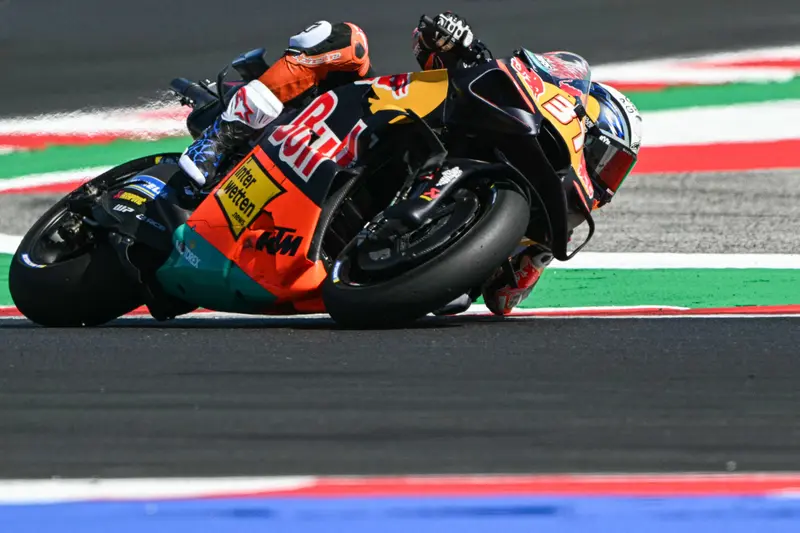
Pedro Acosta’s dominance on the KTM RC16 has become a puzzle even for the factory team. Since joining KTM in 2025, the Spaniard has consistently outperformed his teammates, and the gap has only widened. Last year he finished fourth, more than 150 points ahead of the next-best KTM rider—his teammate Brad Binder. In 2026, the pattern continues: Acosta is P5 in the standings, while Tech3’s Enea Bastianini sits 12th, 117 points behind.
That superiority was again on display at the San Marino Grand Prix at Misano. Acosta claimed third place behind the Marc Marquez brothers, finishing 18.5 seconds ahead of Bastianini, who came home eighth. The difference versus Binder was even larger, with Acosta over 20 seconds clear of the KTM rider in P11.
KTM boss Pit Beirer has addressed why the team struggles to make sense of what Acosta is doing in the corners. Speaking to journalist Adam Wheeler at Misano, Beirer explained that KTM engineers believe the current 850cc engine layout is “hindering” the bike’s turning, and that the team plans changes for 2027—specifically altering the position of the crankshaft and the output sprocket. However, despite those concerns, Acosta appears to be able to work around the issue.
David Emmett, recalling the discussion on the Paddock Pass Podcast, said Beirer’s point was that the 850cc gives KTM a chance to make the crucial engine changes it wants, because the current crankshaft and output sprocket placement needs to be moved to help the bike turn better. Emmett added that the team can see from Acosta’s data that he is performing the necessary adjustments, but they “don’t understand how he’s doing it.” Emmett framed it as evidence of an “exceptional rider,” noting that while other factors can influence results—such as crashes or physical issues—Acosta is simply “there” consistently and is the only KTM rider achieving that level of performance.
Acosta himself has suggested that his advantage at KTM is “sad,” while also acknowledging the strain it creates. He has told Binder and Bastianini to “improve,” because it makes things harder for him to override the RC16 into positions it “should not be in.” At the same time, KTM’s engineers are left with a clear takeaway: even if the bike’s hardware is not ideal for turning, Acosta’s cornering data shows he can extract something the rest of the team cannot yet replicate.