RIVOLA WARMS TO MOTOGP’S 2027 RULES AFTER TESTING
30 Oct 2026·
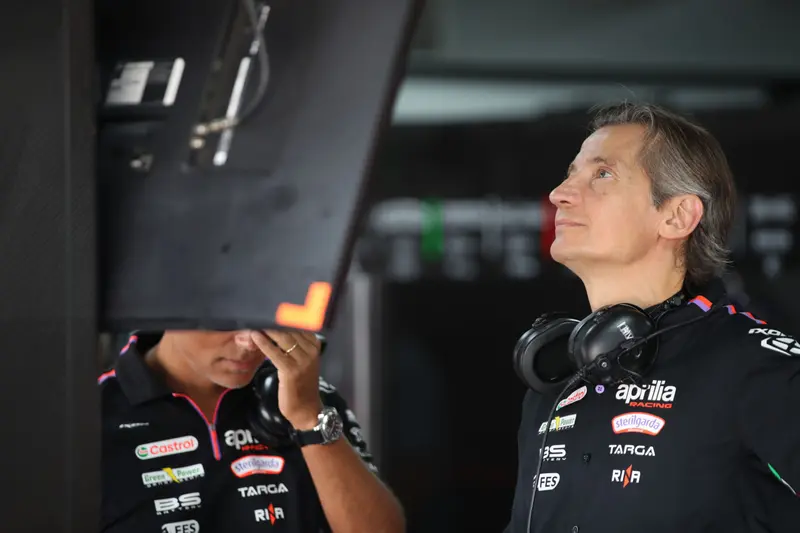
Aprilia team principal Massimo Rivola says his view of MotoGP’s 2027 technical overhaul changed after he saw the new machinery’s pace in testing. The rules will reshape the bikes, with 850cc engines, revised aerodynamics and new Pirelli tyres among the major changes. Rivola, who chairs the manufacturers’ association MSMA, said he had initially been the only team principal opposed to reducing engine capacity from 1000cc.
His concern was the cost of developing a new engine. “I didn’t want to make that sort of investment,” he said, adding that Aprilia had done everything it could to resist the change. But testing helped persuade him that the new package could deliver strong performance despite the smaller engines.
Referring to a test in Austria, Rivola said manufacturers had spent heavily to make bikes two seconds slower, before the switch to Pirelli tyres. The new tyres may be easier to manage, he acknowledged, but the stopwatch showed that the bikes remained fast. He now sees the regulations as “a big step forward technically in terms of simplifying the bike.”
Rivola was also reluctant to give up the aerodynamic technology that manufacturers have developed. He said he had tried to defend the wings, which he described as Aprilia’s “pride and joy,” after proposals to remove them and ground-effect devices. “I like motorbikes that give the impression of being spaceships on two wheels,” he said, noting that he may be among the few who feel that way.
Even so, Rivola’s broader argument is that MotoGP should retain a sense of technological distinction. He compared the championship with Formula 1: spectators may drive sports cars, but they will never drive an F1 car. MotoGP, he said, should likewise present machines that feel exceptional rather than like production-based Superbikes. The new rules have not erased his enthusiasm for advanced engineering; after seeing the test times, he is more convinced that the series can simplify its bikes while preserving their speed and identity.