YAMAHA’S 850CC ENGINE STILL LAGS AS DEVELOPMENT OF ITS 2026 V4 ENDS
19 Nov 2026·
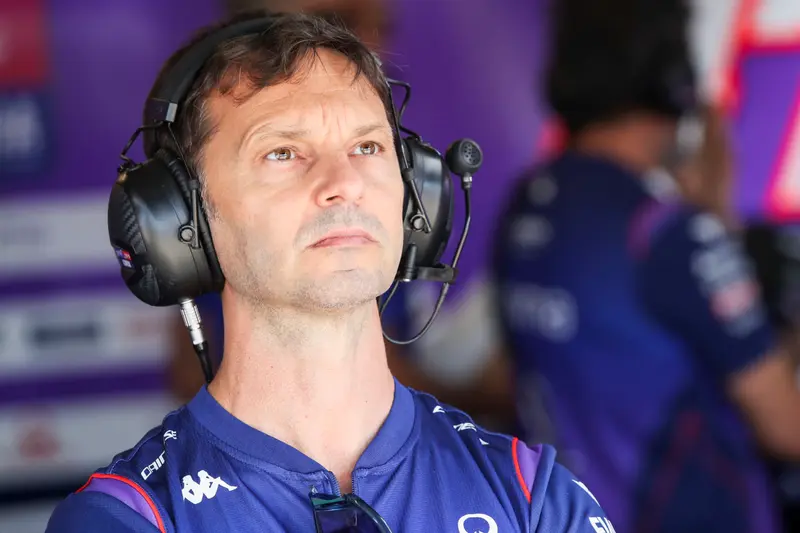
Yamaha is still working to bring its 850cc engine up to speed for MotoGP’s 2027 rules, and Pramac team manager Gino Borsoi says the project faces a significant challenge. He hopes the manufacturer can make progress over the winter, but believes a major improvement may not arrive until well into the new season.
From 2027, MotoGP will reduce engine capacity from 1,000cc to 850cc, ban ride-height devices, tighten aerodynamic rules and switch tyre suppliers from Michelin to Pirelli. Yamaha and its rivals have already tested their new-generation bikes, while Pramac has sampled Yamaha’s 850cc machine at official Pirelli tests in the Czech Republic and Austria. The team is due another opportunity at the post-season Valencia test after the 2026 finale.
Borsoi said Yamaha was “not yet strong enough” in the engine department, particularly after the Austria test. The circuit’s demands made the engine’s shortcomings more apparent, he explained, although he stressed that development is at an early stage and Yamaha is working hard. “I hope that during the winter we can take a small step forward to be prepared from the start,” he said. “But we know that we are not yet strong enough in that respect. I hope that, from the middle or end of the season, we can take a real leap forward.”
He also said the team was “not actually that far behind compared to this year,” while cautioning that Austria’s layout requires strong engine performance. His assessment suggests Yamaha may need much of 2027 to make the power unit competitive, a concern for the riders set to race its new bike.
The challenge is also evident with Yamaha’s current 1,000cc V4, introduced this season with the 2027 regulations in mind. Borsoi says its development has now ended, although he still expects some gains in the final two rounds. Pramac has not achieved the results it wanted or made the progress anticipated since mid-season, he said, and the team is aiming to reverse its recent run and finish positively.
Portimao’s long straight is likely to expose the bike’s engine weakness, Borsoi warned, but he sees opportunities on the circuit’s more technical sections, where handling and agility matter more. The V4’s best Grand Prix result so far is Fabio Quartararo’s fifth place; Jack Miller gave Pramac its strongest result with seventh in the Phillip Island Sprint. Miller’s Australian finish is also Pramac’s only points in the past six rounds, after both Yamaha teams missed Qatar because of company-wide travel restrictions concerning the Middle East.
Toprak Razgatlioglu is the only rider from Yamaha’s 2026 line-up returning in 2027, but he will miss the Valencia test while recovering from shoulder surgery. He has also been ruled out for the remainder of 2026. Pramac test rider Augusto Fernandez will race in his place for the final rounds. Fernandez said he was “really excited to be back racing again” and wanted to build on the progress made in his first two outings with the team.
Miller, who is set to leave Pramac after the season and is 19th in the championship, said he was looking forward to returning to Europe and making the most of his final two races with the team. “We have so much history so it’s an exciting last part of the championship,” he said. He added that he was keen to finish the season on a positive note.
Pramac newcomer Izan Guevara is expected to ride at the Valencia test. He will make his MotoGP debut with the satellite team alongside Razgatlioglu in 2027, after Yamaha opted not to renew Miller’s contract. Jorge Martin and Ai Ogura are set to join the factory squad, replacing Quartararo and Alex Rins.
Miller has expressed confidence that Yamaha is “on the right track” with the 850cc project. Test riders Augusto Fernandez and Andrea Dovizioso have led much of the development, including work around the new Pirelli tyres. Yamaha has also reported encouraging signs from the chassis. Managing director Paolo Pavesio said the 850cc bike had “rediscovered” the cornering strength traditionally associated with the manufacturer, a quality that had faded during development of its first V4-powered M1 this year.
That progress may offer encouragement, but Borsoi’s warning highlights the importance of the engine: strong cornering alone will not be enough if Yamaha cannot deliver competitive power.