LIBERTY MEDIA’S NEW MOTO GP LEADERSHIP SIGNALS A COMMERCIAL SHIFT
30 Sept 2026·
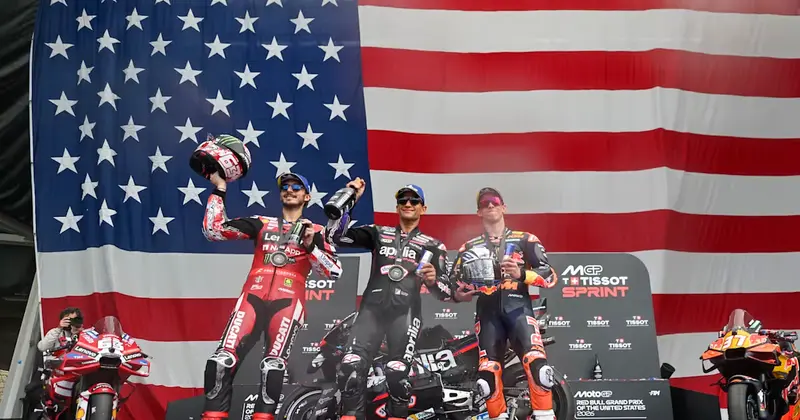
MotoGP’s new owner, Liberty Media, is reshaping the championship’s leadership as well as its commercial ambitions. The organisation, renamed MotoGP Sports Entertainment Group (MSEG) after last year’s takeover, recently announced four senior appointments. Their backgrounds span the NFL, Premier League clubs Tottenham Hotspur and Manchester United, Formula 1, UFC, Discovery and Warner Bros, with roles including chief strategy officer and chief revenue officer.
The appointments mark a shift away from the close-knit management structure associated with Dorna chief executive Carmelo Ezpeleta. They signal that MotoGP is becoming a broader commercial enterprise rather than remaining the personal domain of its long-time Spanish leader. That change is not presented as a dismissal of Ezpeleta’s contribution: his vision helped build the championship into what it is today.
The expansion of business expertise raises questions about what commercial growth might mean for the sport. MotoGP could pursue new markets, including parts of Asia, where motorcycle sales are substantial. But the source also points to concerns about how that push may affect the championship’s character: riders being used in promotional spectacles shortly before racing, and the prospect of replacing Phillip Island with a potentially sterile Adelaide street circuit.
The commercial turn follows a longer effort to make MotoGP more entertaining and competitive. One major change came when organisers threatened to exclude factory teams, prompting manufacturers such as Honda and Yamaha to supply customer teams with machinery closer to factory specification. Technical rules were also simplified and standardised, including the adoption of control tyres and electronics, common engine specifications and restrictions on gearing and chassis design.
A freeze on engine development was introduced partly to control costs and partly to narrow the performance gap. Concessions later gave struggling manufacturers more technical freedom. The source argues that these measures, alongside advances in television coverage, have helped produce exceptionally close racing. After 14 of 22 rounds this season, the championship leaders were level on points, with four or five riders still considered potential title winners as the final third of the campaign began.
The concern, then, is not that commercial success has failed to improve the show. The racing is described as more competitive and safer than ever. Rather, the question is whether something less tangible—authenticity, humanity, or the prominence of the athletes who take the risks—could be lost as financial strategy and corporate management take a larger role.
The article ultimately urges fans to welcome the new investors and let them pursue growth, while remembering that the sport’s development has been funded by its audience. Its closing reminder is that MotoGP has never raced better or, in practical terms, safer—and that fans help pay for it.