MOTOGP’S NEW TWO-WAY RADIO SYSTEM SET FOR 2027 AFTER YEARS OF DEVELOPMENT
4h ago·
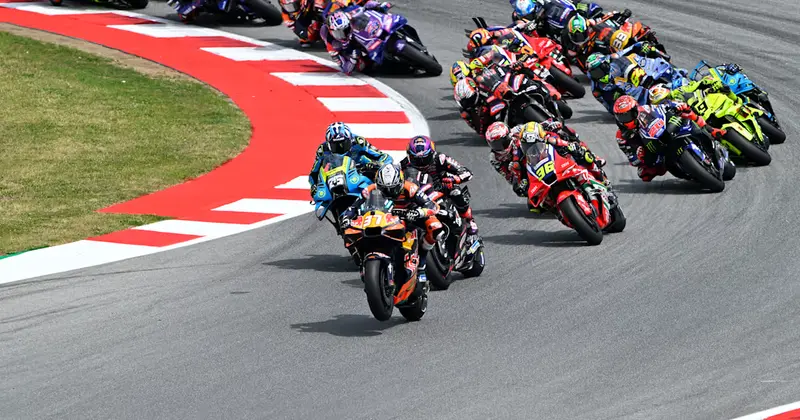
MotoGP’s long-running push to bring live radio communication to riders is moving toward a major change from the 2027 season, with the MotoGP Group developing a system designed to deliver safety messages instantly and reliably to all 22 riders at once. The project—driven technically by Sergi Sendra, Senior Director Media Production Technology for the MotoGP Group—has been in development for more than six years, and has required not only new audio technology but also new infrastructure, new hardware integration, and extensive testing under real Grand Prix conditions.
Sendra explained that the original request came from Carlos Ezpeleta (then in the sport department, now Deputy CEO), who asked for a test where riders could hear messages while riding. Early concerns centered on radio frequencies, coverage, and the practical need for equipment small enough to fit within the “hump” area of the leather suit without compromising the rider’s gear. The top priority, Sendra said, is safety: if a red flag message is sent, it must reach every rider simultaneously and without delay. For that, the system relies on digital audio transmission over IP rather than analog methods.
The challenge was enormous. Sendra stressed that this cannot be bought off the shelf: the team had to invent the solution to reach 22 riders independently, in any position on track, with high-quality audio and no meaningful latency. The project required coordination across riders, teams, race direction, the FIM, helmet and leathers manufacturers, and circuit operators—plus technology partners responsible for hardware and software development while also navigating different national rules for radio frequencies.
Rider gear and hearing protection became a key constraint. All MotoGP riders use earplugs because the bikes are extremely loud, with noise levels close to the FIM limit of 130 decibels. Brad Binder, speaking during Aragon, described the environment as “absurdly loud,” adding that when all bikes are on the rev limiter in the grid it is “hectic,” which is why he appreciates the extra help from the earplugs and the new communication system.
A major theme in the development was that rider needs are not uniform. Sendra said the project is “huge” because there are 22 riders—22 preferences—and that riders ultimately must wear and respond to the equipment. He also noted that 11 teams must update their technology because what is currently used is outdated, and the system must be networked, partitionable, and able to route communication depending on who is being addressed (for example, a Ducati-specific channel if needed).
Hardware integration proved one of the toughest hurdles. Sendra described the difficulty of fitting microphones and ear components without affecting helmet homologation, especially given the FIM’s evolving safety standards. Testing also had to be done in Grand Prix conditions, where the full technical setup and infrastructure are present. Sendra said this limited testing opportunities, forcing additional private tests with riders including Dani Pedrosa and Michele Pirro, as well as the Espargaro brothers and Lorenzo Savadori.
The team explored multiple audio approaches before finding the breakthrough. In-ear solutions were eventually rejected because there was no common solution that worked across riders. Bone-conduction technology also caused problems: Sendra reported that during tests in Japan with Audio-Technica, it was painful and created pressure, leading the team to develop something that adapts to helmets. Speaker-based ideas were similarly complicated by the fact that helmet cheek pads are not identical across the 10 manufacturers in the grid; Sendra said they developed five generations of speakers and worked with Marelli on a compact unit for the bike’s “hump,” taking three years to improve the overall quality.
The breakthrough came with a softer material that integrates the in-ear approach while matching comfort and sound quality. Sendra emphasized that it must be comfortable—otherwise there is no point continuing—and that volume and clarity must allow riders to do their job without stress from distracting noise. Michele Pirro was among the first riders to receive individually made ear pieces in Barcelona; Sendra recalled that during a test Pirro came in and said it was “perfect,” though the team still needed further feedback because the system was not yet finished.
Looking ahead, the system is also being designed for two-way communication, which would expand the entertainment and storytelling value beyond safety messages. Sendra argued that MotoGP has previously been like a “silent film,” hearing only engines, and that live radio could change how viewers understand and experience races. Francesco Bagnaia was more cautious, saying it is a big change and he does not know if it is needed, but that they must try it. Marc Marquez focused on the show: “for the show it will be better,” and he added that people want to see such things. David Alonso said he is open to it and believes it could be fun, especially if he can speak with his team at certain points on track.
Not all riders are fully convinced. Sendra said some remain skeptical, with reports of riders asking not to be spoken to while riding. He also noted that in certain track sections riders prefer not to hear anything—Fabio Quartararo said he would rather not hear messages in the “Curvone” at Misano, and Alex Rins said the same for parts of Mugello. For safety messages like “Red flag,” Sendra said the system must be handled intelligently, with the suit unit connected to GPS so riders can be tracked live.
Sendra also addressed the emotional and practical impact of communication during crashes. He said the team is already learning from a setup where a team listens in confidentially, with riders speaking mainly when in the pits. He expressed hope that the system won’t be used because of a crash, but if a rider stops on track, the rider could tell the team whether they are okay and prepare next steps for the session while returning to the pit lane—potentially saving time. He added that clear protocols will be needed, and referenced Trackhouse team boss Davide Brivio’s comment that they do not talk much on radio, which Sendra countered by saying it is because they have not had the system yet.
Finally, Sendra highlighted a key milestone from Motegi 2025, when Marc Marquez won the title in Japan. Sendra said the AudioCom network was installed within three days, and that they told Marquez they would want to hear him shouting if he became champion, though they could not guarantee it would work. Marquez stayed with the audio technicians rather than in the TV room; when he crossed the line, Sendra recalled hearing Marquez shout “Ho he fet!” and said the audio was perfect—an emotional moment that also demonstrated the system’s potential.
Beyond MotoGP, the concept is being tested in other disciplines. Dave Prater, Director of Supercross at Feld Entertainment, said Supercross and Motocross have been experimenting with radio communication, including tests during the Supercross season and in Motocross. He suggested that 2027 will bring new insights, and that officials would likely speak with riders first, before expanding to team-to-rider communication and selected pilots during press days.