CRUTCHLOW BACKS MOREIRA WITH A THREE-YEAR PATH TO WORLD TITLE
1 Sept·
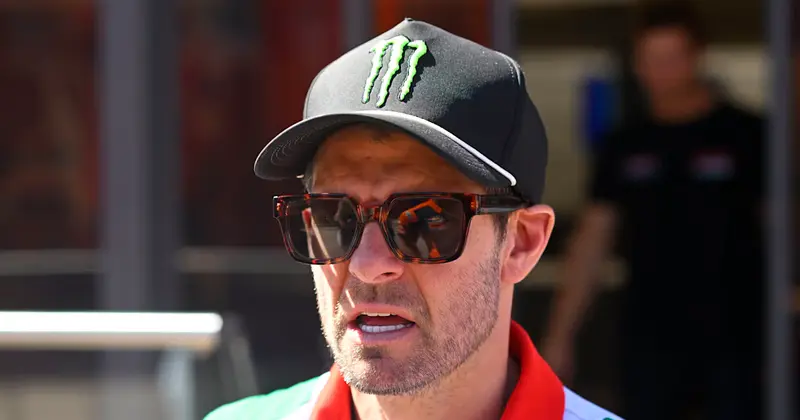
Cal Crutchlow was in Aragon as a precaution in case Johann Zarco’s comeback run brought any issues, but with no problems reported, the Brit spent Friday afternoon in the commentary booth with the motoGP.com team. Speaking about his own return to MotoGP machinery, Crutchlow said the challenge wasn’t simply raw pace. “The speed wasn’t really the problem when I came back. It was about relearning all the things on the bike,” he explained. He highlighted the need to rebuild fundamentals, including braking technique: “I had to learn again how to brake—also in lean,” and he added that the switch in manufacturer meant he was adapting to a different motorcycle than the one he’d last ridden.
Crutchlow also reflected on what his six race weekends had meant for him. “What I managed in six race weekends was quite good—and that is six years after I retired as a full-time rider,” he said. However, he was clear that the experience hadn’t reignited his competitive fire: “It hasn’t brought my fire back. I knew the replacement position at LCR was limited by time. I knew when I was going home.” While he didn’t rule out testing, he stressed he wasn’t chasing a return to the grid. “Testing, yes of course—I’m open to testing something in that area—but I’m not going around saying I want to ride again.” Even so, he acknowledged the appeal of the best package: “Riding the best bikes in the best series and working with the best people—why not? That still applies.”
Asked about how teams handle short-notice replacement decisions, Crutchlow recalled a discussion around why Lucio Cecchinello didn’t simply bring in a young rider from Moto2 to replace Zarco. “You can’t just come in and be fast immediately in two weeks,” Crutchlow said. He added that even if a Moto2 option was considered, those riders are in the middle of their own seasons and may not want to risk derailing their careers. “So everything worked out well for me,” he concluded.
Turning to the current Honda situation, Crutchlow said the manufacturer has made progress. “Honda has made good progress. The known DNA of the bike is still there, but now it feels different because of the downforce,” he said. He noted that Honda is using all available resources and pointed to mixed results with Marco Marini and Mir, while still acknowledging they achieved good races. “But the 850 Honda seems to be good,” Crutchlow added.
Crutchlow’s most detailed praise went to his short-term teammate Diogo Moreira. “He has talent and he’s good in his head. I like him—he’s a great guy,” Crutchlow said. He then offered a bold timeline for Moreira’s potential: “I give him three years, then he can be world champion.” Crutchlow said he had reviewed Moreira’s data and observed his riding style, emphasizing that Moreira is working on a bike that continues to improve. “He’s doing very good work for it—he has no fear, he fights,” Crutchlow said. He also described Moreira’s temperament: “He never gets upset and he’s very intelligent.”
From the garage, Crutchlow said it was “great” to have Moreira as a teammate, and he suggested Moreira’s understanding of tyres has grown quickly. “Now he understands the tyres better, and he’s not a passenger on the bike anymore,” he said. On braking, Crutchlow singled out a standout strength: “He’s strong on the brakes—he has some trick, which I can’t reveal. I tried it, but it never worked for me.”