Mavericks Who Shaped MotoGP History: Sheene, Simoncelli and Roberts
1 Sept·
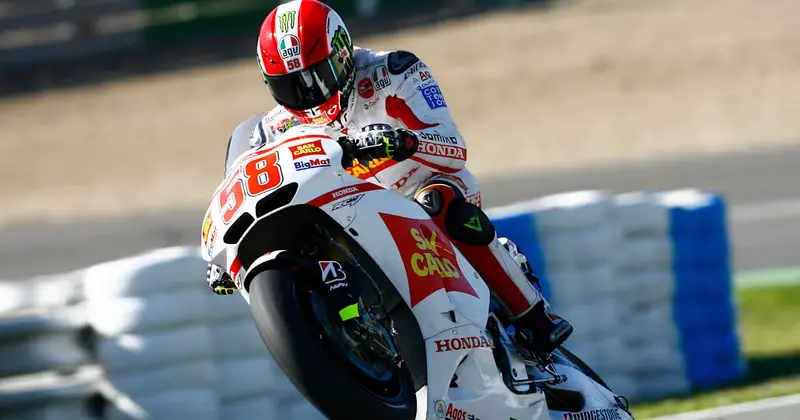
Motorsport has never required obedience to become legendary. Across different eras of motorcycle racing, some of the sport’s most memorable figures built their careers on refusing to conform—whether that meant challenging race organisers, rejecting certain circuits, or even creating their own machines rather than working within a factory structure.
Barry Sheene is one of the clearest examples. The two-time 500cc world champion with Suzuki in 1976 and 1977 was portrayed as a showman and a rebel at the same time. His nonconformity wasn’t limited to the paddock; it also shaped his decisions about where and how he raced. After his first appearance, Sheene refused to return to the Isle of Man Tourist Trophy, arguing that the 60.8-kilometre Mountain Course no longer felt appropriate for him. The TT’s hard-core supporters reportedly held a grudge for years after his refusal.
Sheene also made headlines for skipping a championship round. In 1976, he missed the World Championship race at the Nürburgring’s 22.8-kilometre Nordschleife because he believed the title was already secured. Later, following the 1977 Salzburgring Grand Prix—where Swiss rider Hans Stadelmann died—Sheene publicly pushed for improvements to safety. He campaigned for larger run-off areas, more rescue helicopters, and better overall protection, and he did so against resistance from FIM officials.
His rebellious streak extended to the type of racing he wanted to see. When it came to the growing popularity of four-stroke superbikes in Britain, Sheene was unimpressed. As the article puts it, he snapped: “If I want to see road machines, I go to Trafalgar Square.” In the end, his stance was not enough to stop change. But his influence did show up in the calendar: in 1977, the Grand Prix moved from the Isle of Man to Silverstone. Without Sheene’s persistent refusal, the dangerous circuit may have remained on the schedule for years.
Another rider who embraced a confrontational identity was Marco Simoncelli. The 250cc world champion in 2008 on Gilera is described as someone who would not be bent to fit expectations. His attitude was summed up by the Italian phrase “sbatti i coglioni,” meaning roughly “I don’t care.” The article frames him as a charismatic nonconformist—an aggressive fighter with a swagger that was compared to Valentino Rossi’s.
Simoncelli’s reputation included both his riding style and his public feuds during the 250cc era, particularly against Spanish rivals. The article highlights a clash with Jorge Lorenzo ahead of the Portugal Grand Prix in 2011. It also notes that when Dorna moved the 2011 Japan Grand Prix to avoid the fallout from the Fukushima disaster, many in the paddock reportedly feared radiation. Simoncelli responded provocatively: he posed for a photo in the team area with a Geiger counter.
His death at the Malaysia Grand Prix in Sepang in 2011 is described as shaking the motorcycle world as deeply as no other crash since Ayrton Senna’s in 1994. The article states that the number 58 has not been used again in MotoGP since then, and that the GP track in Misano was named in his honour.
Rebellion also appeared off-track in the career of Kenny Roberts senior. The three-time 500cc world champion (1978, 1979, 1980) ended his Yamaha relationship in 1996 after 20 years, and the break was anything but polite. He was quoted as saying: “At Yamaha there are some people I wouldn’t even piss on if they were burning.” Rather than accept a factory role, Roberts built his own Grand Prix machines. First came the 500cc three-cylinder Modenas, backed by the Malaysian manufacturer, and later the Proton KR with a V5 engine.
The article stresses that Roberts’ independent effort struggled against the Japanese works teams and Ducati. Still, it records a significant moment: in 2002 in Australia, Jeremy McWilliams won the last 500cc pole position in history aboard the V3 Modenas, even as the sport was moving toward the new 990cc four-stroke era.
Roberts explained his frustration with the routine. He said: “I was sick of always hitting the same drum.” He added that he couldn’t sleep and needed to change things: “I can’t sleep anymore, so I’m going to change it.” The article concludes with Roberts reflecting that he has not regretted the expensive experiment, suggesting he had a habit of changing parts of his life early—saying: “Maybe I wanted to change some things in my life too early. I always did that. I was ahead of the time.”
Taken together, these stories show rebellion taking many forms: refusing certain events, pushing for safety reforms, challenging rivalries and organisers, and even building machines outside the factory system. In each case, the common thread is a refusal to accept the status quo—an attitude that, according to the article, is part of what turned them into lasting legends.