MOTOGP TEAM MANAGERS SAY RAW TALENT IS NO LONGER ENOUGH
3d ago·
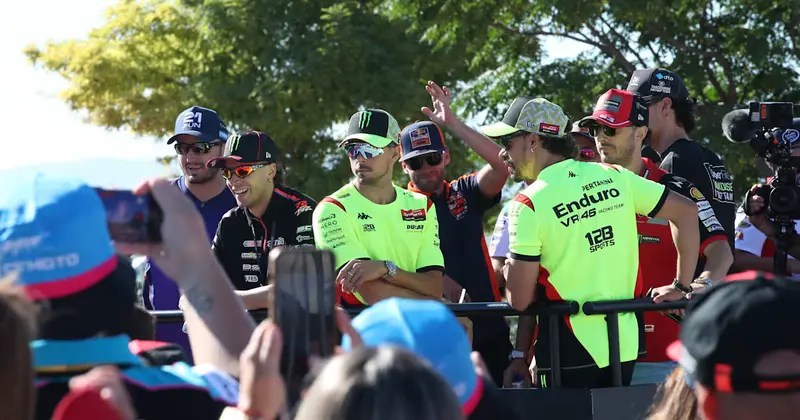
VR46-Ducati team manager Pablo Nieto says the modern MotoGP rider has to be more than just a naturally gifted racer. In his view, the sport has become so professional that raw talent alone no longer guarantees exceptional results.
Nieto, who grew up in Grand Prix paddock life as the son of 13-time world champion Angel Nieto and later raced himself before moving into team management, described the shift in expectations. “The sport was always becoming more professional. In the past, of course, natural talent was enough to achieve outstanding results. That is no longer sufficient,” he said. He added that riders must be talented on the bike and also work hard, not only with the team during race weekends but “outside the races” as well.
A major part of the change is physical preparation. Nieto pointed to how demanding the current era has become, arguing that riders now train at a level comparable to other elite athletes. “The sport has become very physically demanding. You have to go to the gym, train with the motorcycle, ride motocross and pay attention to your diet,” he said.
LCR Honda team boss Lucio Cecchinello agreed that the younger generation looks different in terms of athleticism. He said the sport has evolved and that talented riders such as Manuel Gonzalez and David Alonso are “real athletes,” adding that they “look like Olympians.”
But fitness and riding ability are only part of the job description. As MotoGP has tightened its professional structure, riders are expected to handle responsibilities beyond the track. Nieto emphasized that communication with engineers, media work, and sponsor appearances have become normal elements of the role. He also recalled how the job used to be simpler: “In the past you only had to ride the motorcycle, that was everything.”
Now, he said, riders must also be proficient in managing relationships with the media, their engineers, and sponsors. “A MotoGP rider has to plan at least 20 days per year to attend sponsor and media appointments worldwide,” Nieto explained.
From the teams’ perspective, those off-track duties are tied to business realities. Nieto noted that sponsors want more than results; they want riders to represent their partners professionally. “If I have a rider who isn’t good with dealing with sponsors, then my sponsor can say that they don’t like that rider,” he said. “We have to show the riders from the beginning how important this area is.”
Overall, Nieto’s message is that while pure talent can still be the foundation for a great career, staying at the front requires the full package: speed, physical fitness, technical understanding, discipline, and professionalism both on and off the circuit.