SEVEN RIDERS STILL WITHIN 70 POINTS AS THE 2026 MOTOGP TITLE RACE TIGHTENS
2d ago·
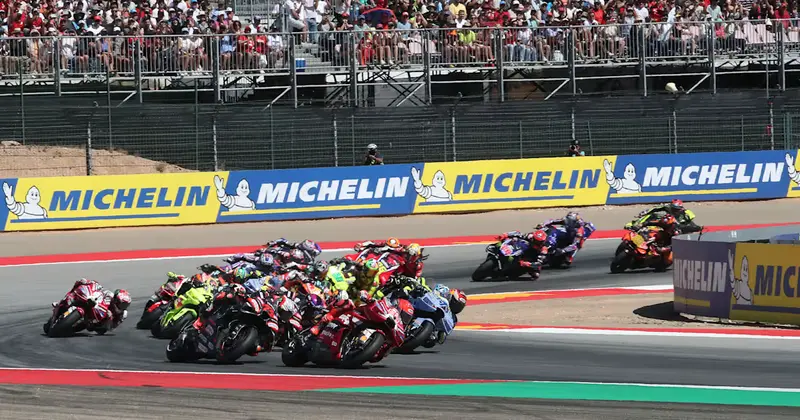
With the MotoGP grid heading into the final stretch of the 1000cc era, the title picture is unusually tight. After 13 of 22 races, and with a maximum of 333 points still available, seven riders sit within just 70 points—meaning that, purely mathematically and assuming a mix of strong results and bad luck for rivals, almost any of them could still win the championship.
The season’s momentum has been shaped by shifting fortunes rather than a single, unchallenged dominance. Early on, Aprilia looked set to run away with the fight, driven by Marco Bezzecchi. But a run of setbacks—some described as bitter and at least partly self-inflicted—turned that early advantage into a more complicated chase.
Marc Marquez’s story has swung dramatically in the other direction. The Speedweek analysis highlights that his early misfortune on the Ducati has transformed into some of the best racing of his career. Marquez has managed to score the maximum 37 points from sprint and Grand Prix wins more than once, including three times. Yet the same rider has also experienced weekends that underline how fragile the momentum can be: after the summer break, the British Grand Prix left him with ninth and seventh places, adding a worrying undertone to the earlier triumphs.
Jorge Martin—world champion in 2024—has also had his share of extremes. The report notes that he is the only other rider to have achieved the maximum points haul, and even then only once. Martin left the most recent Grand Prix in Aragon with his lead reduced to just 19 points over Marquez. The analysis points to a particularly harsh Catalonia weekend for Martin: he finished twice without points and crashed six times. In Hungary, he also crashed and took out his teammate Bezzecchi in the process. Despite those setbacks, Martin remains a major contender because he repeatedly finds a way to collect points even when he doesn’t win.
Bezzecchi, meanwhile, is portrayed as the key figure keeping the Aprilia title challenge alive. He has been close enough to the lead to make the fight feel genuinely multi-rider. The analysis states that Bezzecchi is only five points behind Marquez, and it also references his strong run of form: he won the first three Sunday races this season and the last two of the previous year. With Aprilia’s technical progress described as significant—enough to overtake the long-dominant Ducati—the report frames the next phase as a battle of teammates as much as a battle of brands. In that context, it emphasizes that Bezzecchi and Martin will be taking points from each other, potentially benefiting the riders chasing them.
Fabio Di Giannantonio is identified as the next Ducati option, holding fourth place. He has one race win to his name and sits 24 points behind Bezzecchi and 48 behind the championship leader, with the report suggesting his chances are shrinking—especially given the nature of his results. It notes that his lone victory came in Catalonia, a race where both Marc and Alex Marquez were absent, Martin crashed, and Bezzecchi wasn’t at his best. Still, the analysis stresses that it remains possible.
One of the most intriguing names in the title conversation is Ai Ogura. The report places him just three points behind Di Giannantonio, with the gap attributed to him missing the latest race in Aragon due to a training accident and a broken thumb. Ogura, riding an Aprilia from a satellite team, is described as a revelation in his second season. Earlier in the year, his pace in the closing stages stood out, and some explanations pointed to him managing tyres by riding slower early. Over time, the report says he improved both his qualifying and his early-race pace, while still finishing fast. It even cites Brno as an example where he pushed Marquez for the win until only a few tenths separated them.
Beyond the main cluster, the analysis also outlines outsider scenarios. Pedro Acosta—often viewed as the next Marc Marquez—lies 14 points behind the leader and 67 points back overall. His talent is not questioned, but the report points to a KTM package that is not consistently competitive. It adds that he can sometimes outperform his teammates so clearly that it looks almost absurd, mentioning Brad Binder, Enea Bastianini, and Maverick Viñales among the riders who have previously won races and world titles in smaller classes. The question is whether Acosta’s determination can overcome both the bike’s limitations and the large points deficit.
Finally, Raul Fernandez is mentioned as a near-reachable candidate. His form has been described as changeable, but the report credits him with two sprint wins and a Grand Prix victory, leaving him just three points behind Acosta.
In the end, the title fight is presented as a tightly interwoven contest where crashes, missed points, and weekend-to-weekend swings can quickly reorder the standings. The analysis closes with a personal reflection: the writer says their heart and head both point to Marc Marquez, echoing a quote attributed to Soichiro Honda—if you knew who would win, there would be no need to race.